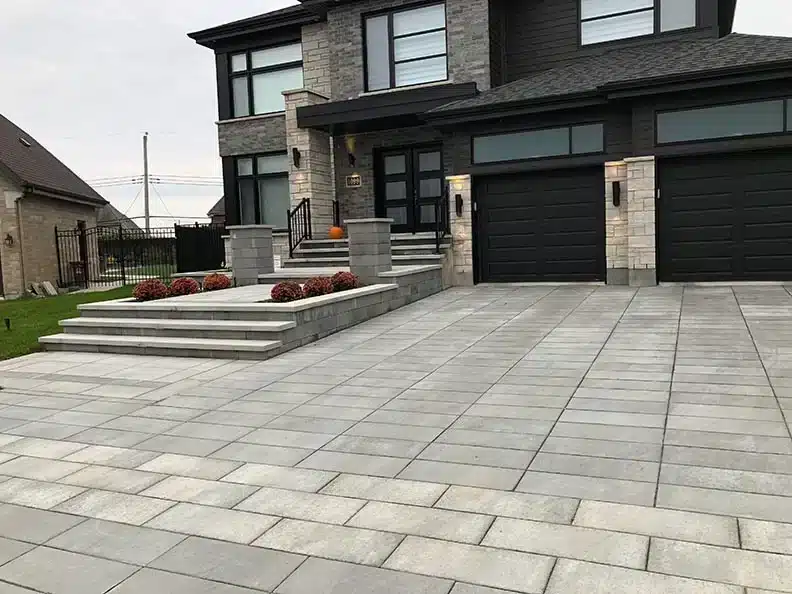
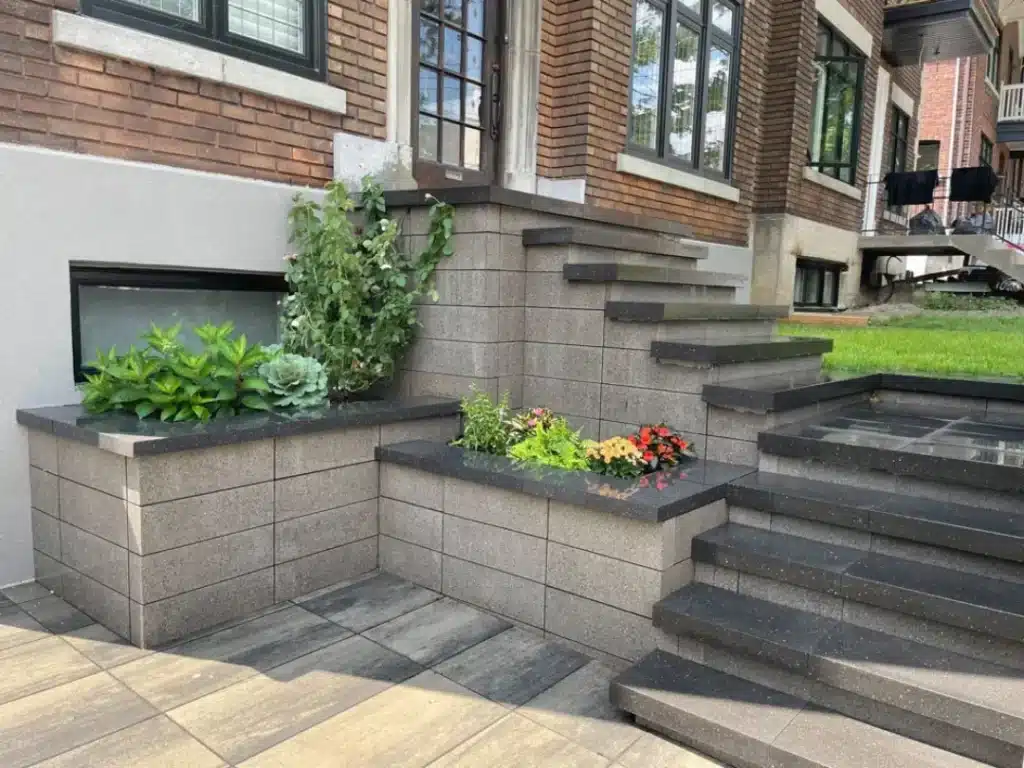
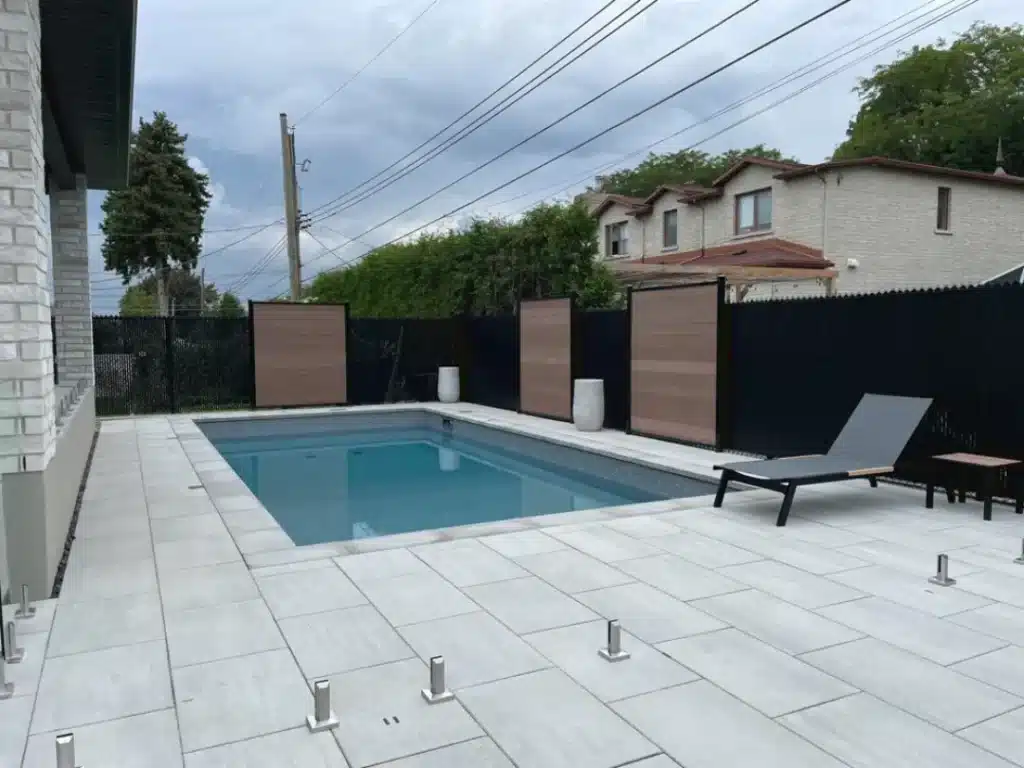
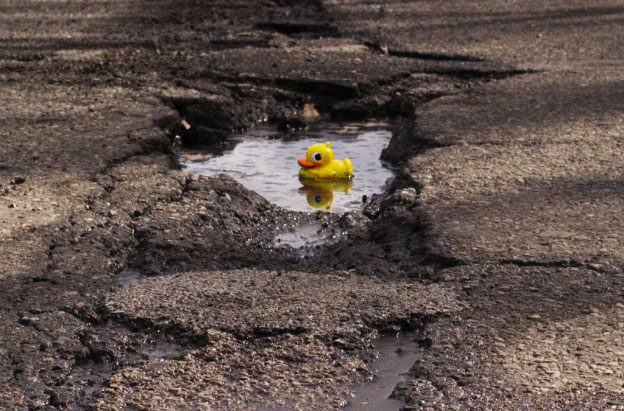
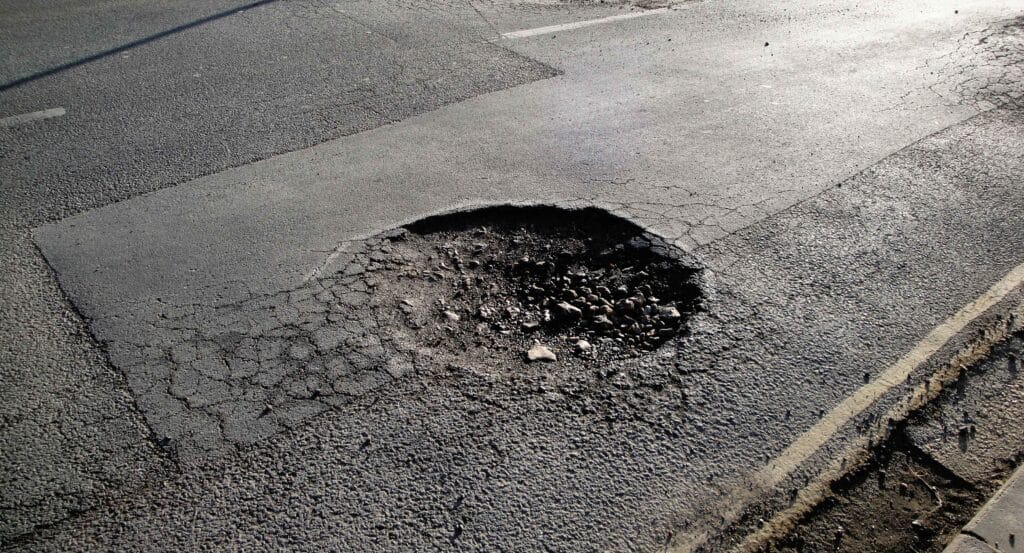
In Montreal, the harsh climate and the soils with varied characteristics put road surfaces to the test, whether they are asphalt or cobblestones. Every winter brings its share of worries for citizens: the dreaded appearance of potholes. These sudden holes that dot roads and driveways cause a lot of damage to vehicles and alter the quality of surfaces. Nevertheless… These deteriorations are not inevitable.
They are often the result of a series of errors in subsoil preparation, drainage management or slope development.
This short technical guide – rich in information – is intended for owners, contractors and municipal officials wishing to understand the mechanisms at the origin of these potholes. It deepens the best practices to significantly increase the longevity of their road surfaces.
Montreal’s soils: a geological mosaic under the influence of
Montreal is a city built on a geological patchwork resulting from its fluvial and glacial past and more than two centuries of dense urbanization. This diversity is not just a geological detail: it directly influences the durability and stability of infrastructure on the surface.
In some areas, particularly in the former river bottoms and low-lying areas, there are very compact clay soils, but with a high water retention capacity. These soils swell when they absorb moisture and contract during dry periods. These underground whims then generate an unpredictable ballet under our cobblestones: sometimes a vertical dance, sometimes a horizontal choreography.
On the other hand, many areas, such as parts of Mount Royal or the west of the island, rest on bedrock. These floors offer excellent natural drainage and stability, but their implementation is more complex and expensive.
Finally, large portions of the city, especially in the historic districts, rest on layers of heterogeneous embankment. These materials have been accumulated over the course of public works (aqueducts, sewers, old foundations) and often have poorly compacted or uneven areas. These heterogeneities lead to localized subsidence and promote water accumulation.
In a climatic context such as Montreal’s, where freeze/thaw cycles are among the most intense in North America, this variable nature of the soil plays a critical role in the durability of the coatings.
Comparison table of the main types of soils in Montreal and their impact on paving
| Soil type | Typical location | Natural behavior | Impact on paving durability | Recommended solutions |
|---|---|---|---|---|
| Clayey | Old riverbeds, low-lying areas (Hochelaga, Anjou, etc.) | High water retention, swelling in wet periods, shrinkage in dry periods | Frequent ground movement, premature cracking, aggravated freeze/thaw cycles | Mandatory draining layer, rigorous compaction, increased slope to limit water accumulation |
| Rocky / bedrock | Mount Royal Sectors, West Island | Efficient natural drainage, very stable, low deformation | Excellent durability, low risk of potholes if well designed | More expensive excavation, installation of geotextile to standardize the base |
| Heterogeneous backfill | Old neighbourhoods (Plateau, Centre-Sud, Old Montreal) | Disparate materials, poorly compacted areas, variable reactions depending on humidity and load | Localized subsidence, irregular cracks, water stagnation | Professional recompaction, stabilization in successive layers, strict humidity control |
| Sandy or gravelly | Industrial areas, land | Rapid drainage, but possible instability without proper compaction | Good performance if well compacted, moderate risk otherwise | Careful compaction, addition of binders if necessary, particle size control |
| Mixed (clay + backfill) | Redeveloped areas (near large construction sites or former quarries) | Unpredictable behavior, density and humidity variations | Combined risks: subsidence, cracks and water stagnation | Geotechnical study before installation, layers of calibrated granular materials, adapted drainage |
However, this nature of the soil conditions the way it interacts with water, ice, heat, mechanical pressure, and therefore the longevity of the paving.
Potholes: a phenomenon aggravated by the climate and the subsoil
Potholes are not unpredictable anomalies. Their appearance is perfectly documented, in particular by the work of ÉTS Montréal and the City of Montreal’s road maintenance guides. As explained in the CERIU technical guide, they are usually caused by water ingress into a crack in the asphalt, which reaches the base, freezes, and then bursts the surface pavement.
Several factors aggravate this phenomenon in Montreal:
- The frequency of the freeze/thaw cycle, which can occur dozens of times per season.
- The abundant use of road salt, which accelerates the wear of the materials and increases the permeability of the pavement.
- Local geological characteristics (clayey, backfilled, poorly drained soils).
- Common errors in the design or repair of surfaces.
In fact, as soon as the subsoil no longer plays its role of support and drainage properly, each crack becomes a point of fragility. And each infiltration, a future cavity.
Clay, backfilled or rocky soil: very different impacts
Clay, capricious and unpredictable, behaves like a sponge… Saturated with water, it swells under the effect of frost – a capricious uplift – and then shrinks when the ice melts. This seasonal dance inflicts countless tensions on the asphalt and pavement; cracks and crevices are the visible scars. And as if that wasn’t enough, its lazy drainage generates stubborn humidity underground.
When we dig into the bowels of urban areas – where water and sewer systems have been rebuilt – we discover junk soil: a mixture of heterogeneous (and often poorly packed) materials. These capricious terrains bend under the weight of vehicles and cry in the rain, subsidence without warning. Basins are then formed, small urban pools where water leads the dance… A paradise for sneaky infiltrations and unexpected breakups.
On the other hand, rocky, well-drained soil provides an excellent base. It limits water accumulation and is more resistant to movement. However, it is more difficult and expensive to excavate, which explains why it is rarely used in standard residential settings.
Subsoil preparation and compaction: a crucial step
Whatever the type of soil, one rule must be made: the quality of compaction. Poorly compacted soil is unstable, subsidences over time and reacts poorly to water. However, in many cases, companies that install paving do not carry out a complete study of the existing soil and do not apply the right preparation protocols.
Compaction in successive layers, the addition of well-calibrated granular materials, and the verification of soil moisture are essential. Laying on a soggy floor, for example, immediately weakens the entire structure.
According to the technical data commonly heard, a compaction of at least 95% of the maximum density must be aimed at to obtain a stable base.
The importance of slopes: water should leak, not infiltrate
One of the great forgotten things in the design of driveways or parking lots is the slope. If the slope of the surface does not allow water to flow properly to the street or to a drain, it eventually seeps into the base of the coating.
It is recommended to have a minimum slope of 1.5% (i.e. 1.5 cm of elevation difference per metre) to ensure effective drainage. However, many surfaces in Montreal have inverted slopes, or those that are too low to allow for rapid evacuation.
A defective slope leads water to the core of the entrance or to the building’s foundation, accelerating infiltration, stagnation and cracking.
Insufficient drainage: a common pathology of Montreal surfaces
The absence of drainage devices (gutters, sumps, drainage layer) is a common mistake in residential or commercial paving projects. Without an outlet for water, moisture accumulates under the coating. With each freeze, it turns to ice, creating a destructive upward push.
According to the City of Montreal, recurring potholes are often located near poorly drained areas, where rainwater regularly accumulates. In older neighbourhoods such as Rosemont, the Plateau or Hochelaga, drainage networks are sometimes insufficient, and owners must be extra vigilant when renovating.
Common mistakes during installation
Here are the most common mistakes seen on construction sites in Montreal:
- Laying on soil that is too wet or frozen.
- Insufficient compaction of the backfill or granular base.
- No geotextile to separate layers and prevent migration of fines.
- Negligence in the evaluation of the actual slope.
- Failure to use suitable drainage systems.
These mistakes are often related to a desire to reduce costs or save time, but they almost always result in costly repairs in the medium term.
Sustainable technical solutions in the Quebec context
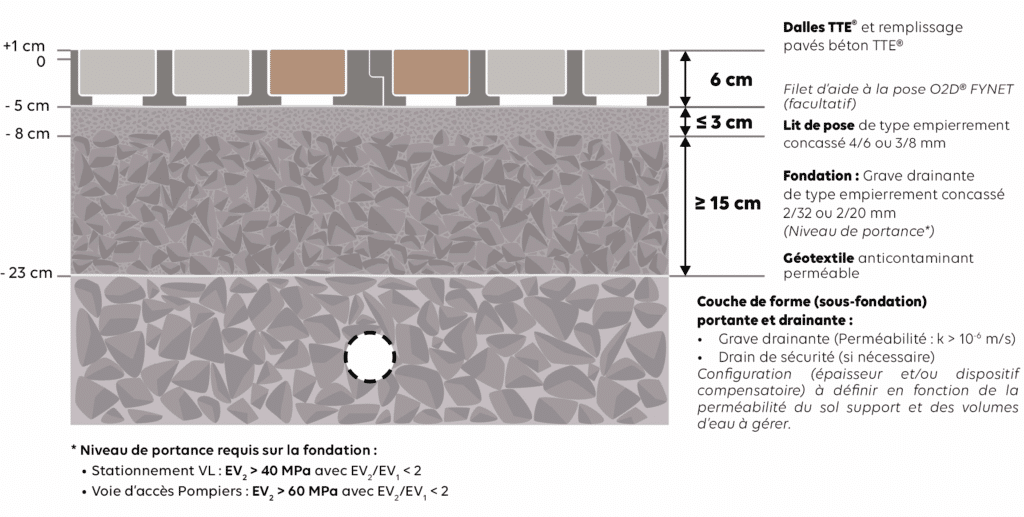
To obtain a sustainable paving despite the constraints of the climate, several technical principles must be respected:
- Assess the soil upstream: identify clayey, compacted, backfilled or wet areas.
- Stabilize the subsoil with good compaction, an adequate granular base, and the possible addition of lime or geotextiles.
- Design active slopes that direct water away from structures.
- Add a draining layer under paving or asphalt, often composed of clean stone or gravel.
- Install spot drains, especially if runoff cannot be channeled naturally.
The approach recommended by the CERIU for road repairs systematically includes these steps, especially in dense urban areas.
| Factor | Effects on Coating Wear | Consequences on pothole formation | Practical recommendations |
|---|---|---|---|
| Clay soil | Retains water, swelling during freezing, frequent sagging | Very prone to surface cracking, sagging and splintering | Drainage layer, reinforced compaction, steep slope |
| Backfilled Soil | Irregular behaviour, localised subsidence, heterogeneity | Troughs conducive to water stagnation and paving failure | Professional compaction, certified materials, geotextile |
| Rocky soil | Good drainage, very stable, durable | Low degradation incidence if implemented well | High cost, but excellent long-term return |
| Insufficient compaction | Instability, movement under load, rapid deterioration | Beginning of cracks and then accelerated formation of cavities | Density standards meet (95% Proctor), lift test |
| Poorly designed slope | Water that infiltrates rather than runs off | Water concentration = frequent potholes | Slope≥ 1.5%, readjustment of levels at installation |
| Lack of drainage | Water trapped at depth, repeated freezing, deterioration of the base | Chronic potholes, rapid subsidence | Addition of linear drains, sumps, draining gravel |
| Montreal’s Climate | Frequent freeze/thaw alternation, intense thermal cycles, intensive salting | Multiply cracks and accelerate their deterioration | Seasonal maintenance, adapted materials, preventive repairs |
An urban problem: between poor planning and urgency of action
Municipal statistics show that thousands of potholes are repaired each year in Montreal. But too often, these are reactive interventions on surfaces that are poorly designed from the start. For building owners or project managers, investing in proper soil preparation and a good drainage system right from the installation saves money in the long run.
As indicated on the City of Montreal’s website, citizens can report potholes, but it is upstream that the real prevention is at stake.
Building surfaces that resist Quebec cycles
Successful paving in Montreal is not just a matter of aesthetic finishing. It’s an engineering challenge, where every layer – from the natural floor to the coating – plays a role in resisting water, cold, weight, and time.
It is a question of selecting suitable materials, understanding the nature of the surrounding soil, honouring the rules of slope and drainage… These are the secrets of a development that will brave time and the rigours of winter without fail. In short, durability is not measured by the brilliance visible to the naked eye; it is anchored in what we build underground, where we cannot look.
Technical table; Sustainability and costs in the Quebec context
| Key Aspect | Freeze/thaw behaviour | Estimated durability | Initial cost | Long-term cost (20 years) | Recommendations specific to Quebec |
|---|---|---|---|---|---|
| Poorly managed clay subsoil | Highly sensitive to movement, accelerated cracking | 3 to 5 years before repairs | Low | High (frequent repairs) | Always install an effective drainage layer and optimal compaction. Avoid installation in autumn/winter. |
| Uncompacted backfilled subsoil | Irregular subsidence, recurrent water pockets | 2 to 4 years | Low to medium | High | Require professional compaction in successive layers, use geotextile and aggregates of certified quality. |
| Rocky subsoil | Excellent strength, fast water evacuation | 15 to 25 years | High | Weak | Ideal for long-term projects. Higher cost compensated by durability and low maintenance. |
| Insufficient drainage | Trapped water, frequent destructive cycles | 2 to 5 years | Low | High | Integrate gutters, sumps, layer of draining gravel. Check the drainage of water annually. |
| Slope≥ 1.5% | Efficient water evacuation, reduced infiltration | 10 to 15 years | Medium | Medium | Adjust slopes by design. Monitor localized subsidence after the winter and correct it promptly. |
| Preventive maintenance | Limits water penetration, delays the appearance of cracks | Extends life from 5 to 10 years | Weak | Weak | Sealing of cracks every 2-3 years, annual inspection after thawing, quick repairs of fragile areas. |
| Climate-Friendly Materials | Improved resistance to salt, humidity and temperature variations | 12 to 20 years | Medium to High | Medium | Use high-performance asphalt (PG 64-28) or interlocking paver designed for freeze/thaw cycles. |
| Installation in ideal conditions | Reduces the risk of initial defects | Meets Intended Durability | Variable | Medium | Apply only in dry weather and temperature > 10°C. Avoid any installation on soggy or frozen ground. |