Introduction
In Quebec, asphalt is the material of choice for paving residential and commercial driveways. Its affordable cost, speed of installation, strength, and ease of maintenance make it a popular choice. However, Quebec’s climate, characterized by harsh winters, frequent freeze-thaw cycles, and extreme temperature variations, poses significant challenges to the durability of paved surfaces. To ensure the longevity of an entrance, it is essential to understand paving processes, common problems, and best practices adapted to the local context.
1. Understanding asphalt: composition and properties
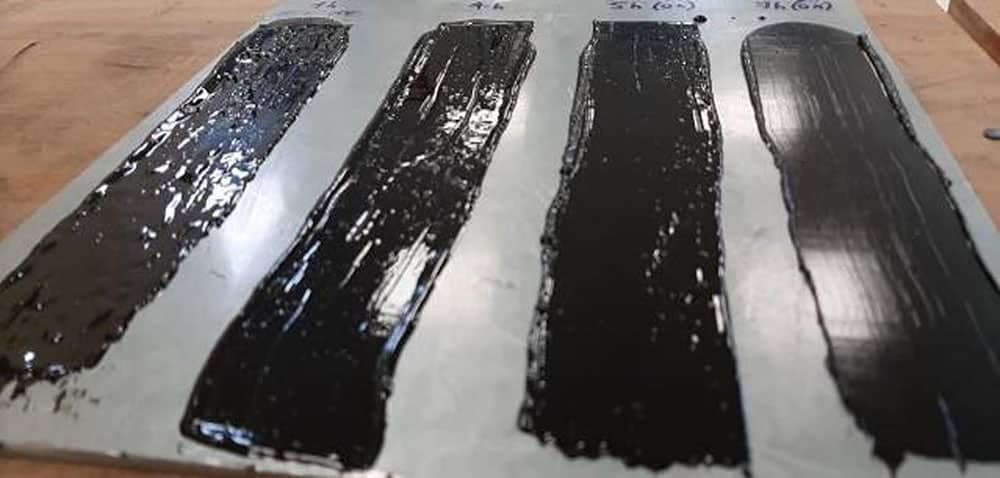
Asphalt, or bitumen, is a mixture of aggregates (sand, gravel, crushed stone) bound together by a hydrocarbon binder called bitumen. In Quebec, the majority of residential driveways are paved with hot asphalt, which offers excellent mechanical strength and flexibility.
Types of asphalt used
- MB-5 (14 mm): Robust mix, used for commercial parking lots or heavy traffic areas.
- MB-6 (6 mm): Finer blend, preferred for residential entrances for its smooth and aesthetic appearance.
The choice of asphalt type depends on the use, the expected load and the budget.
Sought-after properties
- Flexibility : To withstand ground movements and temperature variations.
- Impermeability : To limit water infiltration.
- Wear resistance : To withstand the repeated passage of vehicles.
2. The steps of paving an asphalt driveway
The durability of an entrance depends first and foremost on the quality of the installation. A well-done paving can last 15 to 20 years, or even more with proper maintenance.
has. Preparing the ground
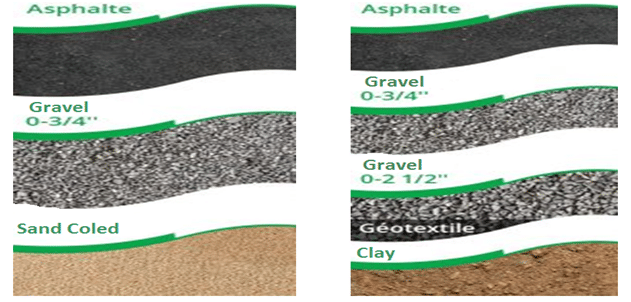
The first step is to excavate the soil to a depth varying from 12 to 24 inches, depending on the nature of the soil and the desired load-bearing capacity. Excavation that is too shallow or poorly prepared soil will lead to premature subsidence and cracking.
- Removal of topsoil : To prevent organic decomposition under the asphalt.
- Leveling : To ensure an adequate slope (usually 2%) allowing water to flow to the street or a drain.
b. Installing the foundation
A strong foundation is crucial to prevent ground movement and asphalt deformation.
- Installation of a geotextile membrane : Separates the native soil from the gravel, prevents contamination and limits the rise of frost.
- Crushed stone backfill : In successive layers (usually 0-21/2 inches and then 0-3/4 inches), with each layer compacted using a vibratory roller.
- Recommended thickness : 12 to 18 inches of compacted gravel for residential driveways.
c. Drainage
Effective drainage is essential to prevent water pooling under asphalt, which is the main cause of cracking during freeze-thaw cycles.
- Slope creation : Minimum 2% outwards.
- Installation of French drains (if necessary): For land prone to water accumulation.
d. Asphalt Laying
The asphalt is delivered hot (about 149°C) and must be spread quickly to maintain its malleability.
- Thickness : 2 to 3 inches (after compaction) for a residential driveway.
- Compaction : Using a vibratory roller, to eliminate air pockets and ensure density.
e. Finishes
- Concrete or paving stone curbs : To prevent edge crumbling.
- Grouting : Especially if the asphalt joins other materials (concrete, paving stones).
3. Quebec’s climate challenges: thermal delta and freeze-thaw
Quebec is one of the most demanding regions in the world for asphalt, due to its climate.
has. The thermal delta
The thermal delta refers to the temperature difference between day and night, or between two seasons. In Quebec, it is not uncommon to go from -30°C in winter to +30°C in summer, or even to experience variations of 15 to 20°C in 24 hours.
Consequences on asphalt:
- Expansion and contraction : Asphalt expands in heat and contracts in the cold, which causes cracking, especially if the material is too rigid or poorly compacted.
- Material fatigue : Repeated cycles weaken the structure and accelerate the formation of cracks and potholes.
b. The freeze-thaw cycle
According to the Quebec Ministry of Transport, the province experiences an average of 60 to 80 freeze-thaw cycles per year in the south (source: MTQ, 2016).
Effects on paving:
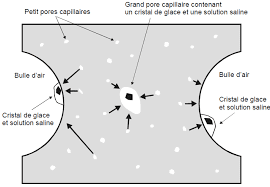
- Water infiltration : Water seeps into cracks, freezes and expands, widening cracks and creating heaves.
- Foundation disintegration : If the base is poorly drained, frost can cause it to swell (frost heave), causing bumps and sagging.
4. Common Problems and Solutions
has. Cracks
- Causes : Poor soil preparation, insufficient compaction, asphalt too thin, lack of drainage, thermal delta.
- Solutions : Quick repair with sealants, application of sealant, partial remelting if the base is reached.
b. Potholes
- Causes : Water infiltration, freeze-thaw cycles, wear and tear.
- Solutions : Cleaning, filling with cold or hot asphalt, compaction.
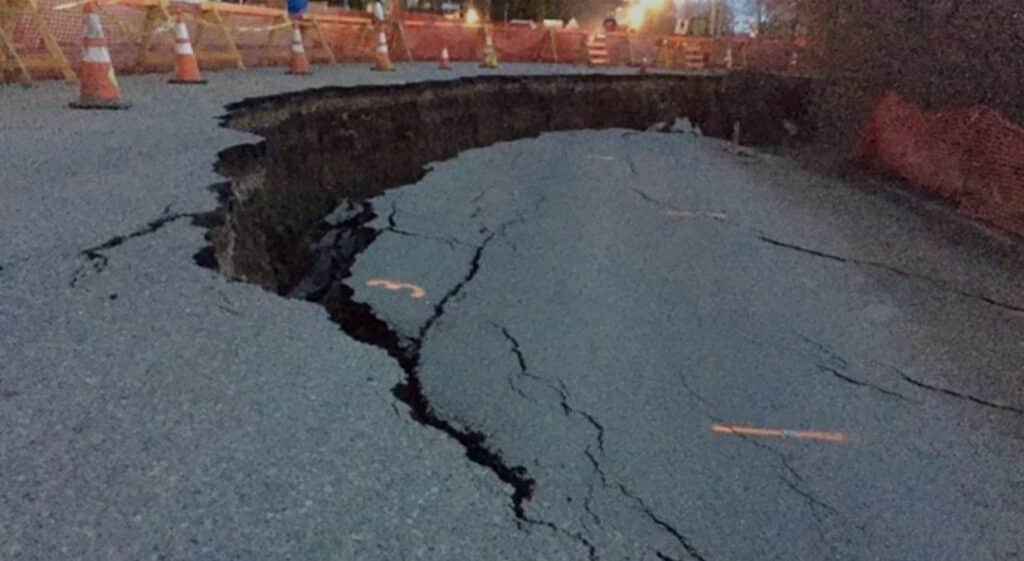
c. Subsidence
- Causes : Insufficient base, clay soil, poor drainage.
- Solutions : Local excavation, foundation correction, asphalt reconstruction.
d. Edge crumbling
- Causes : Lack of curbs, passage of heavy vehicles near the edges.
- Solutions : Adding borders, repairing damaged areas.
e. Water accumulation
- Causes : Insufficient slope, subsidence, clogged drains.
- Solutions : Slope correction, drain cleaning, installation of additional drains.
5. Preventive maintenance
Regular maintenance extends the life of the asphalt and limits costly repairs.
has. Sealant application
- Frequency : Every 2 to 3 years.
- Benefits : Protects against water, UV rays, gasoline, and salt.
b. Crack repair
- When : As soon as they appear, especially in the fall before winter.
- Methods : Hot or cold sealing.
c. Drainage Cleaning and Maintenance
- Importance : Avoid the accumulation of standing water.
- Actions : Clean drains, remove debris.
d. Avoid overloading
- Tip : Do not park heavy vehicles or equipment on the edges of the driveway.
6. Innovations and alternatives
has. Polymer-modified asphalt
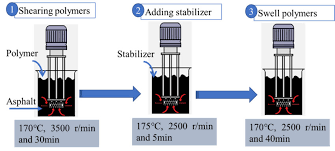
- Advantages : Better freeze-thaw resistance, increased flexibility.
- Use : Increasingly prevalent on main roads, but also accessible for high-end entry-level vehicles.
b. Permeable paving
- Principle : Allows water to seep into the soil, reducing the risk of cracks due to freezing.
- Limitations : Higher cost, specific maintenance.
c. Concrete and paving stones
- Alternatives : More durable, but more expensive and less flexible in the face of freeze-thaw.
7. Choose the right contractor
The success of a paving also depends on the choice of the contractor.
Criteria to consider:
- Reputation and references.
- Liability insurance.
- Compliance with standards (e.g., BNQ, MTQ).
- Details of the quote (thickness, materials, warranty).
8. Official Standards and Recommendations
- Ministère des Transports du Québec (MTQ): Technical specifications on materials, thickness and installation (Guide de design des pavements souples).
- Bureau de normalisation du Québec (BNQ): Standards for granular materials and asphalt.
9. Testimonials and feedback
Many Quebec homeowners testify to the need to choose an experienced contractor and not neglect soil preparation. “A poorly installed base will be responsible for cracks, dents, holes after installation. The base must therefore be well laid, with good weather conditions to avoid all these inconveniences” (source: Protégez-Vous, 2022).
Paving an asphalt driveway in Quebec requires careful planning, professional execution and regular maintenance. The challenges posed by thermal delta and freeze-thaw cycles are real, but can be overcome with the use of the right materials, a solid foundation and effective drainage. Investing in quality from the outset means ensuring a durable, aesthetically pleasing and functional entrance for many years to come.