When planning the construction or rehabilitation of an asphalt residential driveway, one question often comes up: what should be the ideal thickness of the pavement to ensure maximum durability? Too thin, the asphalt may crack quickly; Too thick, the costs increase without necessarily bringing additional benefits. In a climate like Quebec’s, marked by harsh winters and repeated freeze-thaw cycles, the right choice of thickness is essential to extend the useful life of paving. This article provides an overview of technical recommendations, the differences between asphalt and foundation layers, and common mistakes to avoid when planning work.
Understanding the Structure of Residential Asphalt Paving
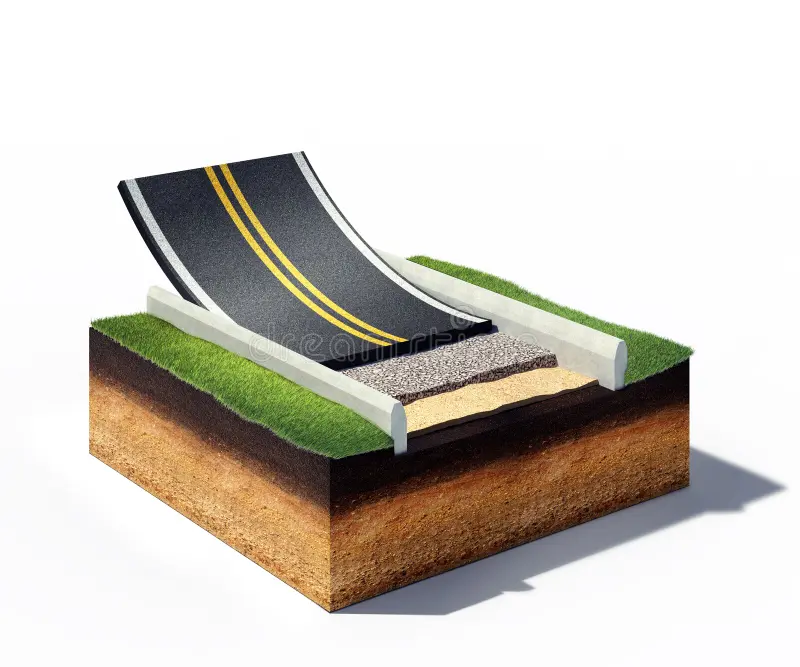
The asphalt visible on the surface is only the top layer of a multi-layered paving system. To ensure its durability, each layer plays a very specific role:
- The foundation (or underlayment) is usually composed of crushed stone or compacted gravel. It forms the basis of the entire coating.
- The base coat (sometimes called a binder) is a thicker, stronger first application of asphalt, used to support the weight of vehicles.
- The top ( or surface) layer is thinner, composed of a thinner asphalt mix, which gives the entrance its smooth texture and final appearance.
These three elements must be planned together. The thickness of the asphalt depends on the quality and depth of the foundation, the slope, the drainage and the frequency of use of the parking lot.
What is the minimum thickness for a house entrance?
For standard residential use, i.e., parking used by one or two family cars, industry standards recommend the following thicknesses:
- Crushed stone foundation: 12 to 18 inches (30 to 45 cm), well compacted.
- Total asphalt: 2.5 to 3 inches (63 to 76 mm), distributed as follows:
- Base Layer: 1.5 to 2 inches (38 to 50 mm)
- Top Coat: 1 to 1.5 inches (25 to 38 mm)
It is not enough to measure the thickness once the paving is complete. The asphalt is laid hot, then compacted with rollers. A layer applied at 3 inches thick can end up at 2.5 inches after compaction. It is therefore crucial that the company carrying out the work respects the thicknesses after compaction, and not only during the application.
And for more intensive use?
In some cases, a residential driveway may require a more robust structure. For example, if:
- You own a heavy sport utility vehicle (SUV), RV or trailer
- The parking lot also serves as a service road for deliveries
- The slope of the land requires increased compaction
It is therefore recommended to slightly increase the thickness of the asphalt, opting for a total layer of 3.5 to 4 inches, while keeping a quality foundation. A thicker base coat (2 to 2.5 inches) will help distribute loads better, and a 1.5-inch finish will ensure a good surface seal.
However, increasing the thickness does not replace a bad foundation. An unstable or poorly drained base will lead to cracks and subsidence, no matter how much asphalt is applied. The quality of the excavation and gravel bed should always be prioritized before thinking about asphalt.
The impact of Quebec’s climate
Temperature variations in Quebec, with extreme temperature variations, make foundations particularly vulnerable. Water seeps into the slightest cracks, freezes, expands, and then bursts the coating from the inside. For this reason, the foundation under the asphalt must be sufficiently deep, well compacted and well drained. Otherwise, even a thick coating will only last a few seasons.
This is also why a proper slope is essential. A slight slope to the street or to a drain prevents water from stagnating, which extends the life of the asphalt, even in areas where road salt is frequently used.

Repaving over old paving: good or bad idea?
Some homeowners try to extend the life of their driveway by laying a new layer of asphalt directly on top of the old one. This method, called resurfacing or “overlaying”, can work temporarily as long as the existing coating is stable and not cracked.
In this case, a 1-1.5 inch layer may be enough to restore the beautiful appearance of the entryway, while avoiding excavation costs. However, this solution should be avoided if:
- Old asphalt is cracked or sagging
- Basic repairs have not been made
- There are existing drainage problems
The risk is that cracks will reappear quickly through the new layer. Worse, moisture trapped between the two layers can worsen the damage.
Mistakes to avoid when tiling
Common mistakes in residential projects include:
- Insufficient or poorly compacted gravel base
- Poor management of runoff water
- Asphalt thicknesses that are not respected (often too thin)
- The use of poor quality or poorly mixed asphalt
- Omitting the base coat (some contractors apply a top coat directly to the gravel)
These mistakes, often due to misplaced savings or an inexperienced contractor, can reduce the lifespan of your driveway by several years. It is therefore better to invest in a professional installation, respectful of Quebec climate standards.
Conclusion: The ideal thickness depends on careful planning
In summary, the recommended thickness of residential asphalt paving in Quebec is 2.5 to 3 inches after compaction, supported on a 12 to 18-inch compacted gravel foundation. For entrances with heavier loads, a greater thickness may be required, but it must be supported by a suitable foundation structure. The durability of an asphalt driveway depends not only on its appearance, but on its entire underground structure.
To obtain paving that complies with best practices and is designed to last in the harsh climatic conditions of the North Shore, it is recommended to call on an experienced company. Bucaro Contractors Inc., active for more than 60 years in residential paving, is recognized for its compliance with installation standards, the quality of its excavation, and the excellence of its materials. By consulting them, you get a fair assessment of your needs, a realistic quote, and a result that meets your expectations – a sustainable and thoughtful investment for your property.