Over time, asphalt driveways can show signs of wear and tear: cracks, sagging, discoloration, or potholes. These symptoms raise a common question among homeowners: should the damaged areas be repaired or the siding completely redone? This question is legitimate, especially when it comes to a major investment. A cracked inlet does not always mean that a complete replacement is required, but there are some conditions that require more drastic action. In this article, we look at the different situations, the causes of cracks, the available solutions and the criteria for deciding between a simple repair or a complete repair.
Understanding the Types of Cracks on an Asphalt Driveway
Cracks in a residential asphalt pavement can have several origins. It is crucial to identify them well, as the repair or replacement strategy will depend on them. The most common are straight-line cracks (often due to thermal shrinkage), spider-web cracks (related to the aging of the bituminous binder) or networked fatigue cracks, which often indicate a weakening of the foundation structure.
A visual inspection can already give valuable clues. Fine, shallow cracks can be filled with a suitable sealant, extending the life of the siding by several years. On the other hand, large, deep, or multiple cracks, accompanied by subsidence or water accumulation, are often a sign of a foundation problem. In these cases, a localized repair could only be a temporary bandage on a weakened structure.
One-off repair: in what cases is it sufficient?
When cracks are few, isolated and not evolving, a spot repair can be quite effective. Plugging with bituminous sealant is an affordable, fast and suitable method to prevent water infiltration, which is the number one enemy of asphalt foundations. By blocking moisture, winter frost prevents the coating from bursting.
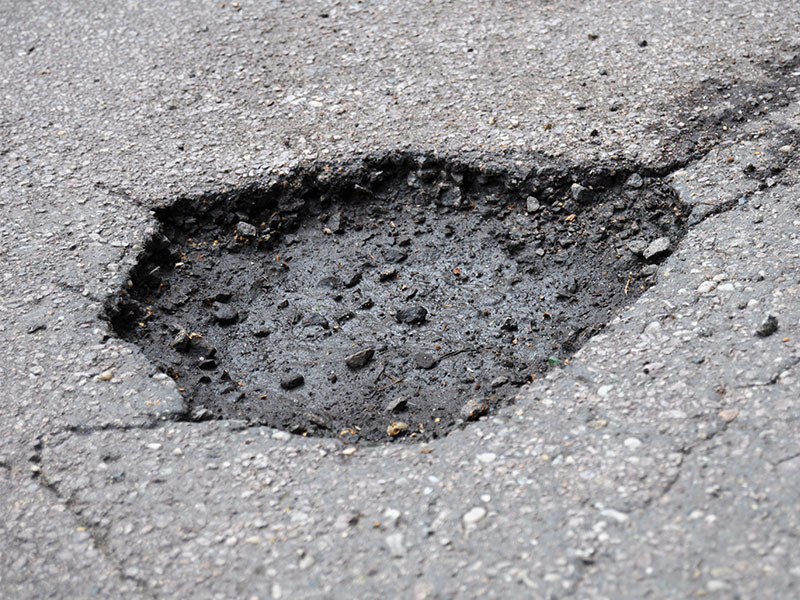
There are also hot patching techniques, where a damaged section is cut, removed and then replaced with new asphalt. This allows small potholes or sagging areas to be treated while maintaining the integrity of the rest of the driveway. This method, when properly applied, can extend the life of the coating by 3 to 5 years without the need for a complete refurbishment.
However, it is essential that the underlay is not compromised. If the subsidence is repeated in the same place or spreads quickly, it indicates that the foundation itself is unstable, in which case repair will not be enough.
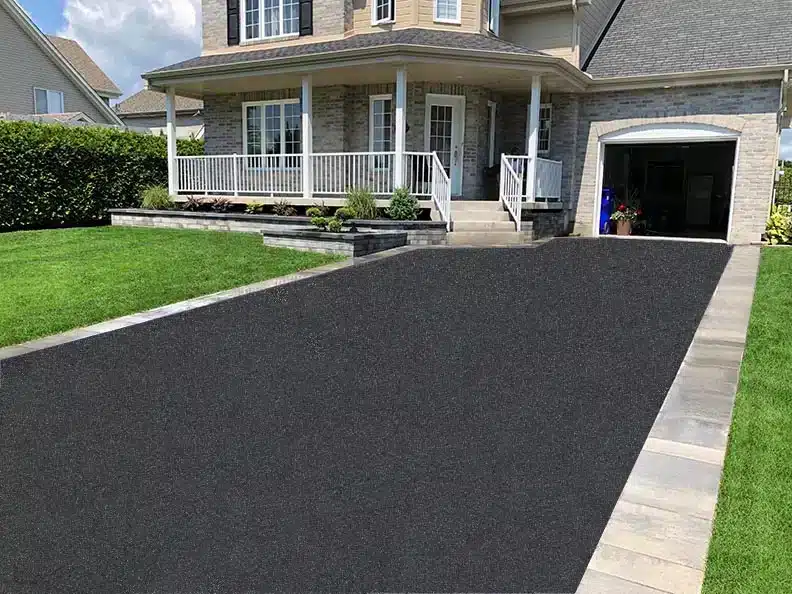
When should you consider redoing the entire entrance?
A complete repair is recommended when the damage is no longer localized or when the coating is more than 15 to 20 years old. Asphalt that has exceeded its life expectancy begins to lose its flexibility and becomes brittle, even if visually the damage still seems limited.
Total replacement should also be considered when the subgrade has been compromised, often due to poor initial compaction, groundwater pooling, or invasive roots. In these cases, you can’t just lay a new layer of asphalt on top of the old one: you have to dig, excavate, stabilize the base with compacted gravel, and then resurface.
Homeowners who also want to reconfigure their driveway (change the shape, widen, add a sidewalk) or improve drainage can take the opportunity to start fresh with an optimized structure. This saves money in the long run, rather than multiplying repairs that only last a few seasons.
The role of the Quebec climate in decision-making
In a region like the North Shore of Montreal, freeze-thaw cycles have a major impact on asphalt pavements. The cracks quickly become entry points for water, which seeps in, freezes, and then bursts the material from the inside. This can turn a small blemish into a big problem in the space of a winter.
For this reason, experts recommend never neglecting a crack, even a slight one, and planning repairs or repairs in the spring or summer, when the adhesion and drying conditions are optimal. In addition, good peripheral drainage (slopes, copings, sumps) is essential to prevent water from stagnating and degrading the structure.
Repair or redo: a question of budget and perspective
It’s normal to want to save on immediate costs, but repeated temporary repairs can end up costing more than completely redoing a driveway with a solid foundation and durable siding. This is why it is recommended to have your situation assessed by a professional, who will be able to determine if the integrity of the basement is still good, or if signs of weakness require reconstruction.
Repaving is not only about repairing: it is also an opportunity to modernize the appearance, correct a problematic slope or adapt the space to new needs (enlarged parking, addition of a side sidewalk, etc.). This holistic perspective can turn a maintenance issue into an improvement in value for your property.
Call on experts to assess the condition of your driveway
There is no one-size-fits-all answer: it all depends on the degree of wear, the initial quality of the work, the soil and the environmental conditions. But one thing is certain: having your driveway evaluated by a company specializing in residential paving is the best way to get a reliable diagnosis.
On the North Shore of Montreal and in the surrounding western sectors, companies such as Bucaro Contractors Inc. stand out for their ability to identify the right solution: targeted repair, partial repair or complete reconstruction. Their more than 60 years of experience in residential paving allows them to advise homeowners objectively and to carry out sustainable work, adapted to the local climate. If your driveway is showing signs of weakness, now is a good time to make a professional diagnosis and consider preventative work that will save you money in the long run.